

These are the books I read in November 2021 with a rating reflecting my opinion on them. I am leaving books not available in English out for your convenience. At the bottom, I will be sharing some recommendations that fall under the category fiction, non-fiction, or non-fiction political. These recommendations are books I have not read myself, so proceed with caution as I cannot speak to their actual quality.
Read

Wilder Girls by Rory Power
I had to read this for a class and it is certainly a weird one. A school for girls on an island has been under quarantine for 18 months due to a mysterious illness called The Tox afflicting humans, animals, and nature. Centering around a group of friends, this book covers the brief events leading to a total breakdown of the rough but predictable life. Hetty, arguably the main character, starts seeing behind the scenes of the school when her best friend goes missing. With a third girl, she tries to figure out where she went, unintentionally unraveling the secrets keeping the girls trapped inside the school borders. This book has a lot going on, from the gruesome parasite-like effects to The Tox, tentative sapphic love, friendship, living in basically an apocalypse, climate change, and human experiments. I was definitely interested in trying to uncover the mysteries of this book, but I can’t say I liked it very much. The writing style is strange, sometimes winding, other times disjointed. I found all the characters very dry and didn’t connect with them much if at all. The fact that many of the tragedies occurring in the pages are due to Hetty’s actions just frustrated me, as much as her struggle with her guilt annoyed me. People die and she has the audacity to judge others who are acting selfishly? Like her prioritization of her friend Byatt wasn’t incredibly selfish. The reveals were somewhat lackluster and the ending absolutely dull and unsatisfying. I did like the way the tox was described and the supernatural elements.
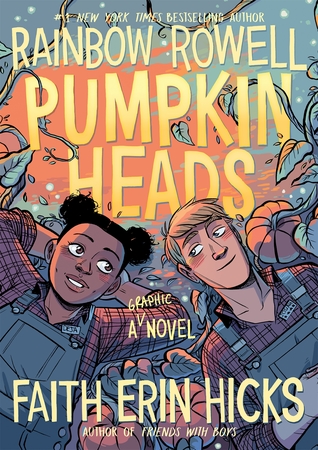
Pumpkinheads by Rainbow Rowell & Faith Erin Hicks
What an atmospheric graphic novel! If you ever want to feel like it’s autumn, Pumpkinheads is the read for you. This story of two friends and their last day working on a pumpkin patch was really sweet and exceptionally well-drawn. Not that much happens, it’s very slice-of-life, but the vibes are simply great. The one thing that bothered me was the ending. I am a big fan of platonic girl-boy relationships and I didn’t like that they took a romantic turn at the end. The idea that a guy and girl can’t simply be friends bothers me a lot and since this story really only has these two characters, it didn’t thrill me at all. Especially since it felt very sudden. Josie, the guy who spends 90% of Pumpkinhead infatuated with a different girl, learns that the real person behind it isn’t what he thought she was? Banger. He immediately goes to his best friend and somehow they now have romantic feelings for each other? Bleh.
Minecraft: Combat Handbook -Updated Edition by Mojang
This was really fun! I liked how this book was structured and how geared it was to be a guide to look back on frequently. It is a bit outdated already, but nothing too badly.

A Foot in the Grave by Joan Aiken & Jan Pieńkowski
This was an interesting collection of stories. Definitely creepy and a few of them I quite enjoyed, but also a bit old-fashioned and not the most original. The illustrations were cool but very infrequent.
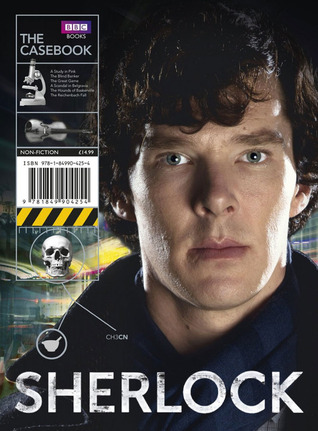
Sherlock: The Casebook by Guy Adams
This was definitely more of a lookbook A fun and engaging accessory to the Sherlock tv series. I really enjoyed the way information was presented as well as the plethora of photos included. The structure was a bit disjointed and depending on how recently one has watched the first two series some parts may be a bit repetitive. Still, a very solid work!

Set in Stone by Linda Newbery
Having to read this book for class, my view on it is quite mixed. This narrative mostly set at a country estate inhabited principally by a father, his two daughters, their governess, and their painting tutor is filled with mystery and the traditional ways of Victorian literature, naturally shown from a neo-Victorian point of view. The mysteries were quite good, some better told than others, but what stuck with me the most is how unsympathetic pretty much all of the characters are. The narrators, the governess Charlotte and the tutor Samuel, are both somewhat interesting yet failed to gain my appreciation. Overall not the worst nor the best book I have ever had to read for a class.

How To Be Autistic by Charlotte Amelia Poe
This was a really interesting essay collection. And it is an essay collection more than a memoir, just one vaguely arranged in chronological order. I really appreciated the insight into the author’s life and especially the poetry. The emotions were really vivid and easy to grasp. I did find some essays a bit meandering and the author’s voice a bit lacking at times, but nothing too horrible. Two things, in particular, bothered me a little, one being the not infrequent universalizing, which while seeking to alleviate stereotypes just rubbed me the wrong way. The other was less with the author and more with the publication. It is mentioned that the author likes being referred to with they/them pronouns but that is not reflected at all on the back cover. Admittedly the author only mentions this information in an offhanded manner in one of the later essays, but it still stood out to me. Overall a unique and interesting book.

Give a Boy a Gun by Todd Strasser
This was such a chore to read. Part of it is due to the age of the book, but mostly just the way it was written. The disjoined ‘report-like’ writing style was really grating and I disliked how a lot of the circumstances in the book were portrayed. Most grievous, however, was the afterword and all the other elements that were way too academic to fit the teen audience this book is meant to address. Honestly, it is unclear if that is even the case. Overall a really unsatisfactory read.

Rugrats: R is for Reptar 2018 Special by Various
I really loved the different art styles for each of the stories the kids told! The plot wasn’t the most compelling, but overall a fun and sweet read.

Rugrats Vol. 1 by Various
This was really fun! The first (and main) story was compelling and a nice, if a bit unfamiliar, update of the Rugrats for the modern time. The art style was nice, even if I found Chuckie’s head to be a bit oversized. The energy of it matched the show really well thought. The second story was less to my liking with the plot not being as well constructed and the art style too crowded. Overall a nice read especially for fans of the original show and/or movies 🙂
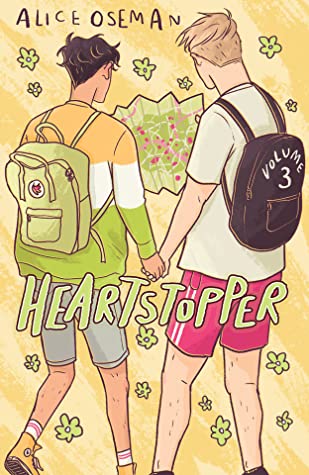
Heartstopper Volume Three by Alice Oseman
The art is gorgeous as always and I adored the deeper dive into Nick and Charlie’s relationship! The abundance of queer relationships (including the teachers chaperoning the class trip central to this volume!), the love for detail, the woven-in serious issues, it’s all incredible.
Recommendations
Fiction
Fight Club by Chuck Palahniuk
“Chuck Palahniuk showed himself to be his generation’s most visionary satirist in this, his first book. Fight Club’s estranged narrator leaves his lackluster job when he comes under the thrall of Tyler Durden, an enigmatic young man who holds secret after-hours boxing matches in the basement of bars. There, two men fight “as long as they have to.” This is a gloriously original work that exposes the darkness at the core of our modern world.”
Stardust by Neil Gaiman
“Young Tristran Thorn will do anything to win the cold heart of beautiful Victoria—even fetch her the star they watch fall from the night sky. But to do so, he must enter the unexplored lands on the other side of the ancient wall that gives their tiny village its name. Beyond that old stone wall, Tristran learns, lies Faerie—where nothing not even a fallen star, is what he imagined.”
Political
Watching Darkness Fall: FDR, His Ambassadors, and the Rise of Adolf Hitler by David McKean
“Watching Darkness Fall will recount the rise of the Third Reich in Germany and the road to war from the perspective of four American diplomats in Europe who witnessed it firsthand: Joseph Kennedy, William Dodd, Breckinridge Long, and William Bullitt, who all served in key Western European capitals―London, Berlin, Rome, Paris, and Moscow―in the years prior to World War II. In many ways they were America’s first line of defense and they often communicated with the president directly, as Roosevelt’s eyes and ears on the ground. Unfortunately, most of them underestimated the power and resolve of Adolf Hitler and Germany’s Third Reich.”
The Crime Without a Name: Ethnocide and the Erasure of Culture in America by Barrett Holmes Pitner
“Can new language reshape our understanding of the past and expand the possibilities of the future? The Crime Without a Name follows Pitner’s journey to identify and remedy the linguistic void in how we discuss race and culture in the United States. Ethnocide, first coined in 1944 by Jewish exile Raphael Lemkin (who also coined the term “genocide”), describes the systemic erasure of a people’s ancestral culture. For Black Americans, who have endured this atrocity for generations, this erasure dates back to the transatlantic slave trade and reached new resonance in a post-Trump world.
Just as the concept of genocide radically reshaped our perception of human rights in the twentieth century, reframing discussions about race and culture in terms of ethnocide can change the way we understand our diverse and rapidly evolving racial and political climate in a time of increased visibility around police brutality and systemic racism. The Crime Without a Name traces the historical origins of ethnocide in the United States, examines the personal, lived consequences of existing within an ongoing erasure, and offers ways for readers to combat and overcome our country’s ethnocidal foundation.”
Nonfiction
The Design of Everyday Things by Donald A. Norman
“Anyone who designs anything to be used by humans — from physical objects to computer programs to conceptual tools — must read this book, and it is an equally tremendous read for anyone who has to use anything created by another human. It could forever change how you experience and interact with your physical surroundings, open your eyes to the perversity of bad design and the desirability of good design, and raise your expectations about how things should be designed.”
The Dawn of Everything: Why We Sleep: Unlocking the Power of Sleep and Dreams by Matthew Walker
“Neuroscientist and sleep expert Matthew Walker provides a revolutionary exploration of sleep, examining how it affects every aspect of our physical and mental well-being. Charting the most cutting-edge scientific breakthroughs, and marshalling his decades of research and clinical practice, Walker explains how we can harness sleep to improve learning, mood and energy levels, regulate hormones, prevent cancer, Alzheimer’s and diabetes, slow the effects of aging, and increase longevity. He also provides actionable steps towards getting a better night’s sleep every night.”

 The Congressional Report